
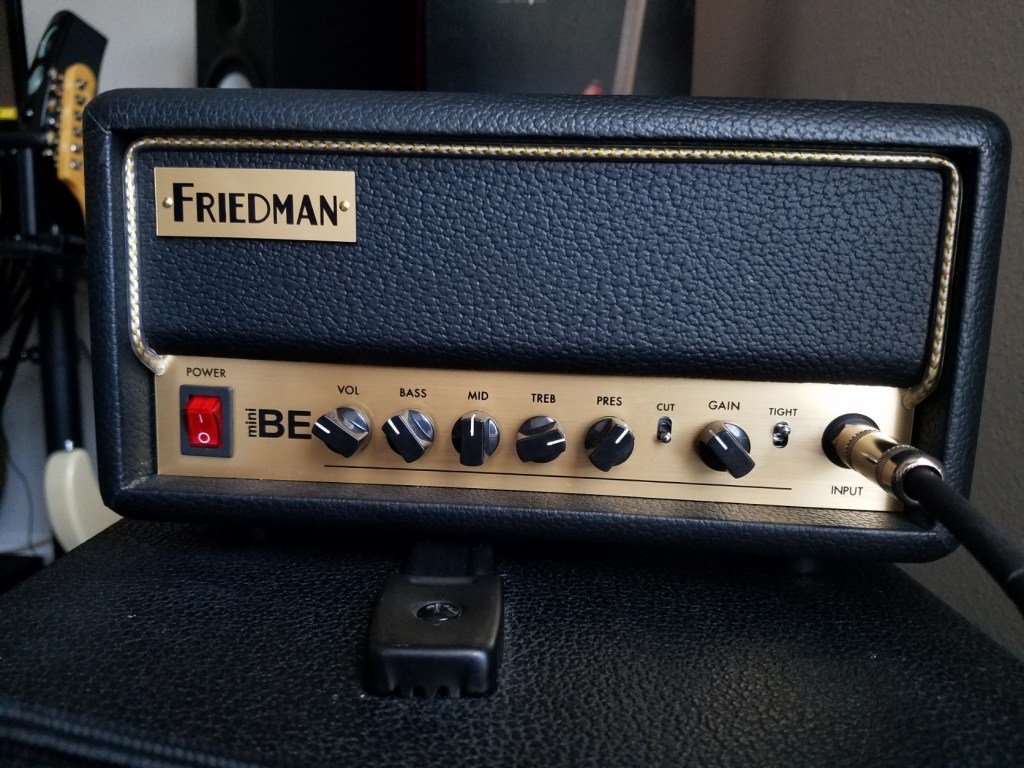
The Friedman BE Mini is a one-channel high-gain amplifier designed by Friedman Amplification and built by Boutique Amp Distribution. Inspired by the flagship all-tube BE amplifier, the BE Mini offers users a taste of the Friedman sound at a fraction of the cost ($200 MSRP at the time of writing this). The BE Mini itself is all solid-state; the preamp is derived from Friedman’s BE-OD Deluxe overdrive pedal, and the back half is a Class-D power amplifier.
When this amplifier launched in 2021, I remember the high-gain guitar community was entranced. Every relevant YouTube channel had a video on it, and many were lured in by its affordability and the promises that the Friedman name holds. Two years later, though, and I don’t really see these amplifiers around at stores or hear people talking about them.
I purchased my BE Mini in the summer of 2022 on a hunch that I would love it. A Line 6 Helix model of the Friedman BE-100 worked its way onto my song “Maximilian Andersocks”, and I was also often reaching for a software plug-in of the same tube amplifier from Plugin Alliance. Upon receiving it I quickly found it excelled at delivering tasty mid-gain split-coil tones, searing lead tones, and solid, if a little flubby, rock rhythm tones. My BE Mini is the sole amplifier heard on my song “Breather”, and was used to reamp the guitar solos for “Uh Oh, Collapsed Dynacoil” and “To Nowhere” from The Jump To Nowhere.
The flubby nature of the amplifier, even with the tight switch engaged on the most extreme setting, has generally kept me from using this amplifier for “general metal purposes”, as I do with my 6505+ or Invective amplifiers. This week though, I’ve put my Opaque Drive to the test and see if it can deliver a crushing metal sound from the BE Mini.
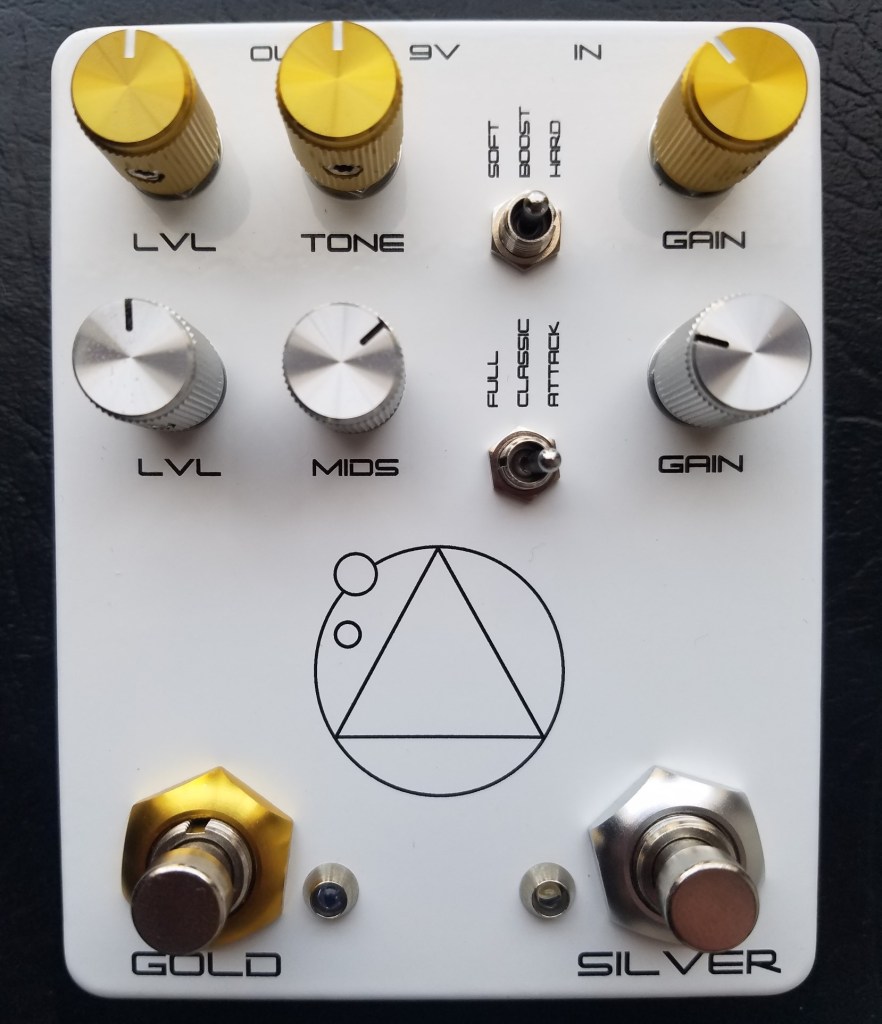
The main player here is the Silver circuit’s ATTACK mode. This aggressive filtering mode attenuates so much low-end from the incoming guitar signal that the BE Mini is left with very little low-end material to amplify into muddiness. The Mid control on the BE Mini is also voiced significantly lower than most high-gain amplifiers, so I raised the MID control on the Opaque Drive to include more punch than the amplifier can deliver on its own. The Gold circuit is set to a healthy volume boost, with only subtle distortion coming from the pedal itself. A video demonstration of the resulting guitar tone can be heard here:
I’m very pleased with the resulting sound. The Opaque Drive sounds like it’s holding the tone together, keeping everything tight without totally changing the base sonic characteristics of the guitar and amp. I love these experiments cause there are so many takeaways that can be had here:
- The Opaque Drive is a one-stop shop for overdrives. If you haven’t already looked into getting one, you definitely should.
- The Friedman BE is viewed by many as maybe more than a toy or a gimmick, but with the right tools and know-how, it’s a capable recording tool. I am completely comfortable tracking just about any rock or metal music with it (and I have)!
- A lot can be said for the cabinet, speaker, and microphone used in these samples. My Zilla Fatboy 2×12 cabinet is one of the best-sounding cabinets I’ve ever heard, and I feel very lucky to be able to record with it. And when it comes to recording guitars, you don’t usually have to look much farther than an SM57.
If there’s a different musical scenario you’d like to hear the Opaque Drive in, (e.g. blues guitar tones, a tone in a certain kind of mix, etc.), be sure to let us know!
 Substation Onyx
Leave a comment