

This past Halloween I released my latest record, an EP called Two Giants! This EP was a big step for me since I’ve long wanted to incorporate vocals into my music, and have just never found the right arrangement or voice. On these songs, some close friends came together and helped with lyrics and vocals, and the result is my best-sounding work to-date! Read on to see what gear made it happen.
The Guitars
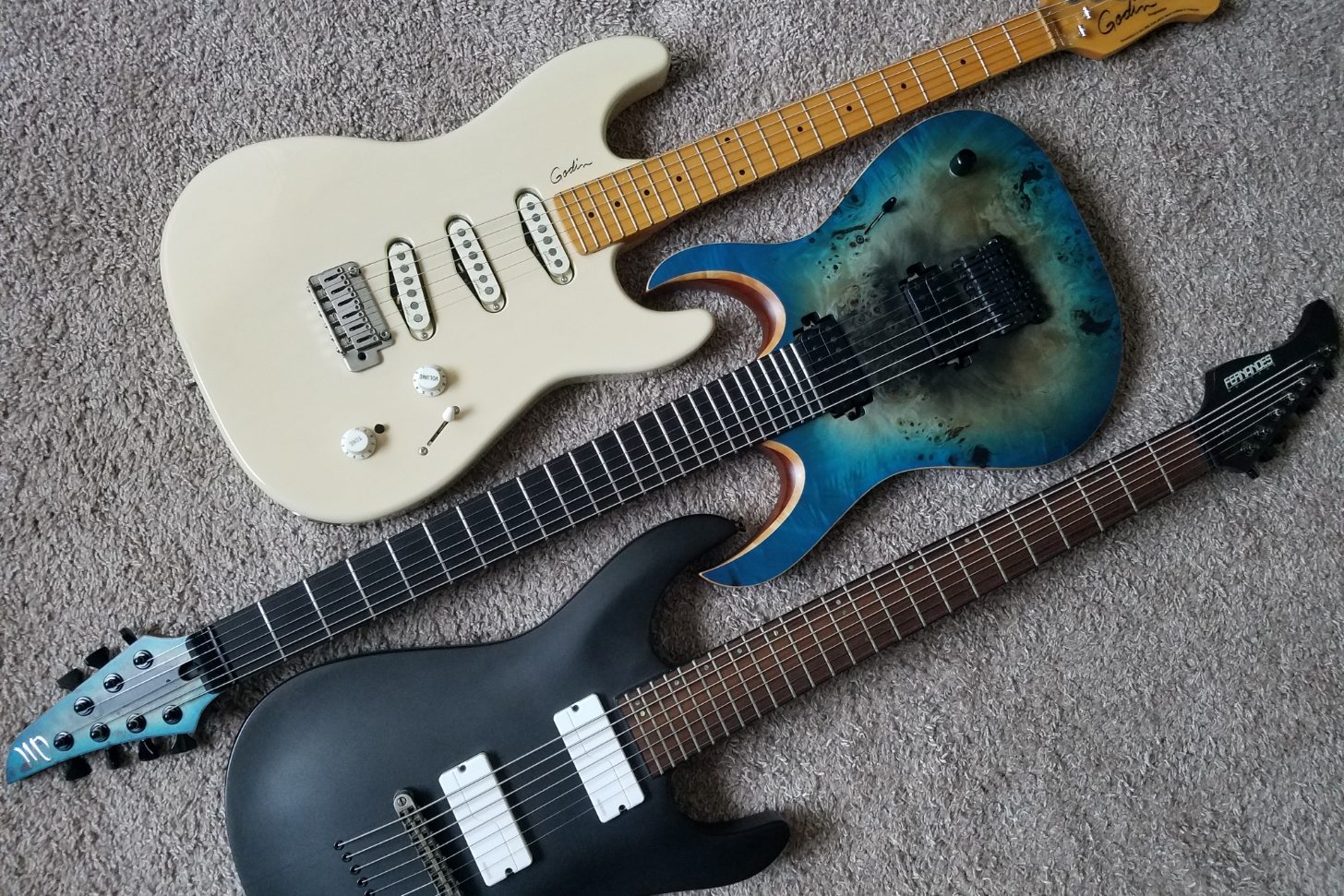
Three guitars were used to record all guitar tones for Two Giants:
- Fernandes Revolver Ltd. 7 – This massive 28″ scale behemoth is my only guitar with active pickups, which are great since I keep this thing tuned to F1. This guitar was used for all parts on the title track.
- Mayones Duvell Elite – My dream guitar was used to record all the guitar parts on “Hum” and most parts on “Nui”, with one exception. This instrument is very bright and is kept in Eb standard tuning, with an Ab on the seventh string.
- Godin Progression – My all-time favorite take on the Stratocaster was used for the mid-gain lead parts on Nui, which are heard most easily in the intro and bridge. This guitar is much louder and mid-forward than most Strats, so it plays very well into my setup, which is situated for humbucker-equipped instruments.
Pedals, Amps, and Cabs
Two Giants is the first release in my discography without an amp modeler handling any of the guitar tones. Every single guitar tone is the product of a amplifier and live cabs (I surprisingly have never received any comments from neighbors). Here’s a breakdown of the guitar tones:
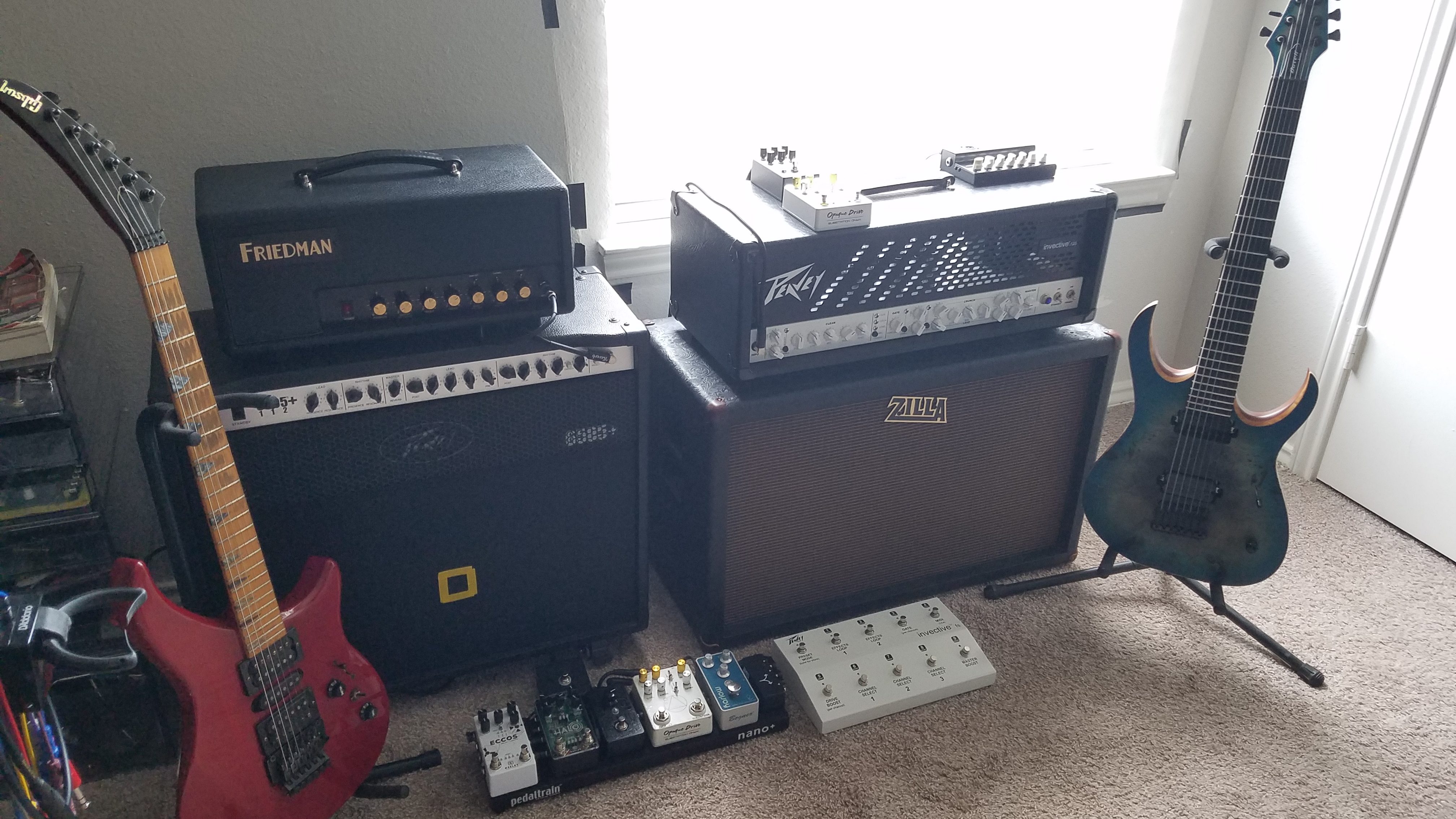
- Rhythm Tone: High-gain rhythm guitars on each song are courtesy of the lead channel of my modified 6505+112, through my custom Zilla 2×12 cabinet, and boosted by the Substation Onyx Opaque Drive Silver circuit in “Classic” mode. An even blend of each of the Zilla’s Vintage 30 and Creamback H75 speakers through Shure SM57 microphones constitutes the rhythm cab sound.
- Lead Tone: The highly-overdriven lead tones on all songs come from the Invective.120 lead channel, boosted by the Opaque Drive Gold circuit in “Boost” mode. This highly saturated and comparatively thin-sounding amp sits very naturally on top of the thicker and more percussive 6505+ rhythm sound. The Zilla cab is used for these tones, but the speaker blend favors the H75. A Keeley Halo tape-style delay is placed in the FX loop of the Invective to fill out the sound.
- Crunch Tone: Single-coiled style rhythm guitars have a unique bite to them in place of the bark and sustain that humbuckers typically provide, and I find that using a British-voiced amplifier in place of the 6505+ produces a less-harsh tone without sacrificing brightness. The Friedman WW20 on the BE channel (no mods engaged) is subbed into the rhythm guitar chain, the coil tap on the guitar is engaged, and all other elements remain the same! This tone is also hidden underneath the clean and lead guitars in the bridge of “Hum” and orchestral section of “Nui”.
- Clean Tone: The clean tone is often where I get the most creative in my signal chains. For all songs, I consistently played the Invective.120 into the Zilla and blended in favor of the Vintage 30 speaker. The Bogner Harlow is always added up front for subtle compression. I usually use the Halo to fill out the sound, but in the title track an EQD Afterneath was added for a more intense atmosphere.
- “Nui” Mid-Gain Tone: The guitar in the intro of Nui is an entirely unique tone crafted specifically for this song, but it’s definitely going to be making more appearances in my music. The use of single-coil pickups into the Harlow, WW20 (fat and gain cut mods engaged on the BE channel), Halo, and Zilla lands this tone in between my clean and crunch tones. The Harlow and natural sensitivity of the WW20 is wildly touch-responsive, so this tone almost beats the rhythm guitar tone for being the most satisfying to play.
The Bass Rig
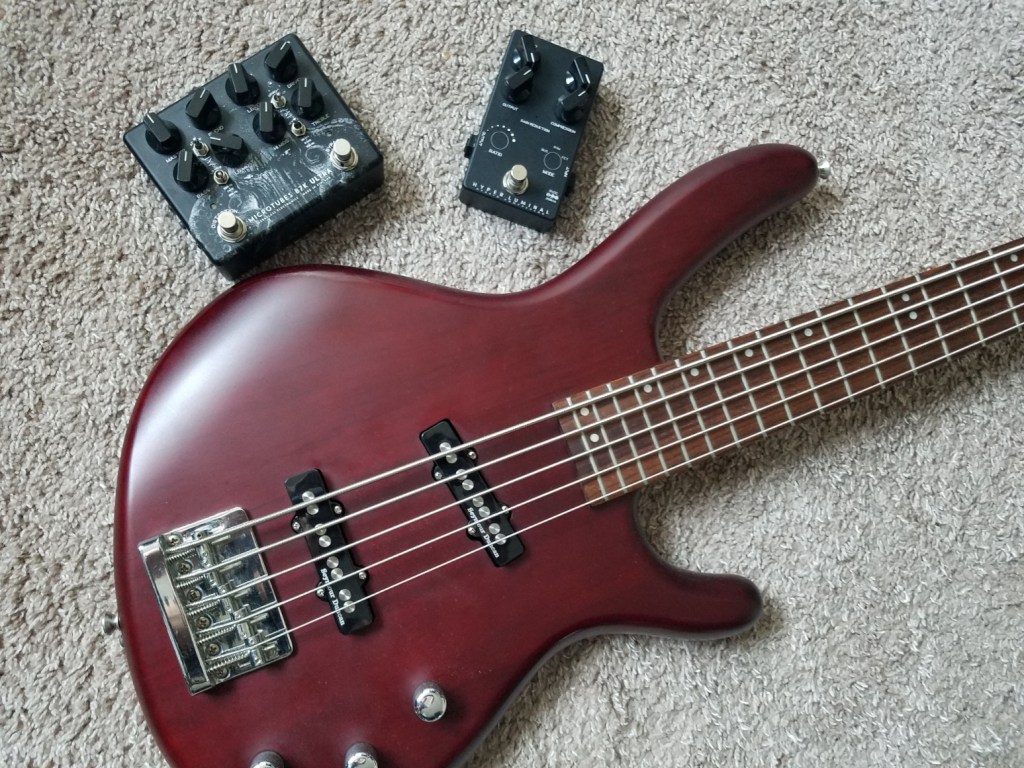
As bougie as I may get with the guitar tones, at the end of the day I need a bass tone that just works and holds up the music around it. The core of my tone is a Cort Action V with aftermarket Seymour Duncan Quarter Pound pickups, and the neck volume rolled off slightly (I’ve noticed this introduces a little extra mid-range grind around 1.5 kHz). The ubiquitous Darkglass B7K Ultra is at the back of the chain for distortion where needed, EQ, and cab sim. The Hyper Luminal compressor is a more recent addition, dialed in for a FET-style slowest attack, fastest release setting to keep the low end pinned as is goes into the B7K. If done properly, this compressor acts in a similar-ish way to how overdrives excite guitar amps. There’s a little more consistency and tighteness across the fretboard.
The Vocal Setup
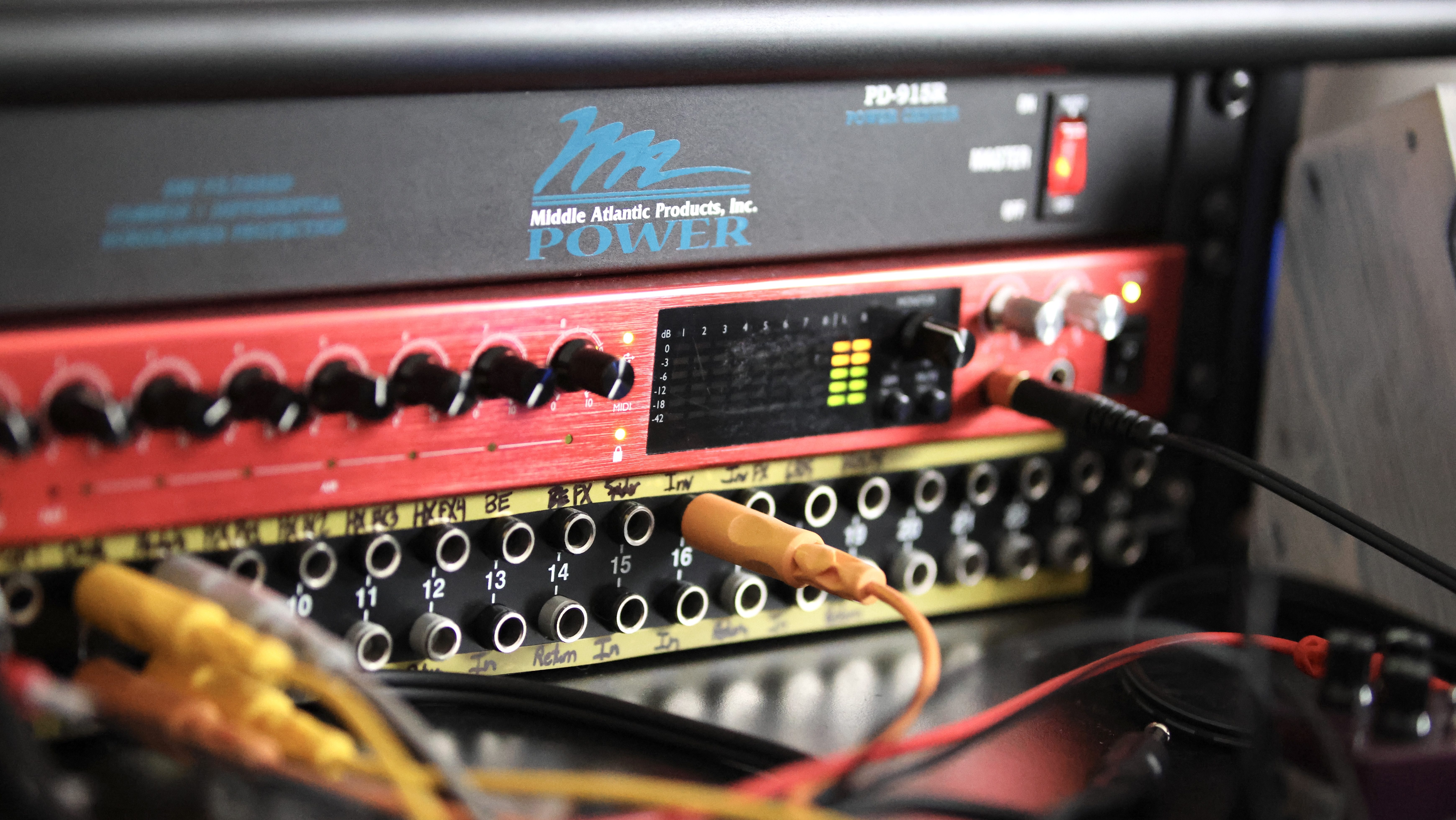
The vocal chain for Two Giants could not have been simpler: a Shure SM7B (both low-end rolloff and mid-presence boost engaged) into a Focusrite Clarett preamp in Air mode. After the preamp, a digital Distressor emulation with the ever-popular attack ~5, release ~4, 6:1 ratio setting for very transparent but powerful vocal leveling is followed by a vocal tuning plug-in, where needed. An auxiliary monitoring channel for the vocalist contained Valhalla VintageVerb.
A capture and recreation of the vocal chain used for Two Giants is available for Quad Cortex users through our Cortex Cloud!
The Mix Bus
When I mix, I almost always send the sum of the instruments through a stereo equalizer and a bus compressor. This record was no exception, so on each song the instrumental bus gets affected by two wonderful effects that elevate a well-balanced mix to a commercially polished, near-finished track.
- SSL UVEQ: A typical 4-band stereo EQ. Here I bump up the highs and ultra-lows with some very gradual shelves, similar to a traditional Baxandall curve. Then, I high-pass to remove useless sub content and then cut out a little mud (~320 Hz for this record). These settings will be the same regardless of the device I’m using, and I’ll just move them around between each EQ I have to see what works best. I find that the UVEQ is a more pristine-sounding option and it adds a tiny bit of depth and stereo width along with the EQ effect it imparts.
- WesAudio _DIONE: An SSL-style bus compressor with a few extra tricks up its sleeve. For metal records, I tend to set this up to do a trick made famous by Adam “Nolly” Getgood, where it ducks the entire mix on snare hits, giving the snare its moment without being too loud. Similar to the EQ, the settings are exact and I’ll try them on different compressors until I find the one that does exactly what I want. I find that the _DIONE does this effect near-effortlessly, so it’s usually the best candidate for the job.
“Two Giants” can be heard on all streaming platforms!
 Substation Onyx
Leave a comment